Many thoughts about identity, Judaism, teaching, meditation, travel, parenting and more

Monday, June 27, 2016

Bat Mitzvah Redo 2016

12 is a terrible age to have a bat mitzvah. I don't know if it's true for others, but when I was that age I felt like my skin didn't fit, I was uncomfortable in front of a group and I didn't have the slightest idea who I even was or how I fit into Judaism.

But now I'm an adult, and I feel so much better about myself, about being Jewish, about everything. Over the years I've followed my own path experimenting with becoming more and more committed, first through gravitating to very observant communities, and later by holding onto my observance but simultaneously discovering progressive and sometimes egalitarian communities in which I could actively become much more of a participant.

So a few years ago as I began to learn how to lein and lead services in my partnership minyan, Minyan Tiferet, I had the idea that maybe I would try again and have a bat mitzvah-type celebration. Doing this would give me an opportunity to actively and maturely demonstrate my relationship to Judaism and to the community by doing the sorts of rituals that are normally done in a bar or bat mitzvah service.

So around October of last year I finally began learning to lein this past week's parsha Be'ha'ah'lotkha.
Read more »

Labels: , , , , , , ,

Thursday, October 01, 2015

Hoshanot 2015

I guess writing about Hoshanot is becoming a tradition for me as I did it in 2013 as well as in 2012 in a post that led to my article on JOFA's site and all the way back in 2005 in this article to name a few. You can search the blog if you really want, but by now you will have gotten the point.

Well, this year I had two similar but distinctly different Hoshanot experiences. The first was in our regular shul. Remembering anxiety in past years about how this might go, I emailed the rabbi ahead of time and asked that it be made very clear exactly where women would be and how to participate during the Hoshanot service. I also asked what I could do to help make sure this happened. Our rabbi assured me all would go well, that he would make sure there was a circle for men as well as one for woman, and said what I could do was recruit (which I did a little).

I was grateful to see that an email appeared in the bulletin inviting both women and men to participate in Hoshanot and encouraged both to bring lulav and etrog.

Read more »

Labels: , , , , ,

Welcome To Our Sukkah!

These first two days of Sukkot were packed and I want to write about two things that happened. In this post I'll tell about the sukkah hop. I'll use another post for the other thing.

So in our shul there is an annual sukkah hop. It used to consist of hoards of children bombarding one sukkah after another, swooping up candy, and leaders pleading with them to say thank you and try not to break anything. At least, that's what I hear.

Read more »

Labels: , , , , , ,

Sunday, March 16, 2014

Purim 2014

Awesome Purim this year.

Highlights:
-another successful women's megillah reading at night (organized by yours truly)
-reading an entire perek (5) at the Tiferet reading in the morning
-delivering mishloach manot
-a lovely seudah

Two things I want to tell in a little more detail:

The first time I ever read Megillah was back at Oberlin. I was asked to read the 5th perek (same as this year) but was given no guidance other than a tape of someone reading. The recording was scratchy and had an old man's voice. I didn't know how to read trope so I just listened to the tape again and again until I was literally doing it in my sleep. (My next door neighbors in the dorm told me.) However, I ran out of time and was overwhelmed and so couldn't even learn the trope for the second half and was disappointed to simply read it aloud at that reading.

In years since I've done either the first or second half again, but have many more resources available now. I have friends who can teach me trope and "spot" me when I practice. I have had more experience. I also have the JOFA app which teaches trope individually and also has an interactive recording that you can listen to with and without tikkun.


I got a head start on practicing and for the first time did the entire perek correctly. If I do say so myself, I blew it out of the water. I read clearly, I read loud and I read with confidence. For someone who has not always been self-assured, I always feel so proud to stand in front of a group and do well with something I've practiced so hard.

The other thing I'll tell about was delivering mishloach manot. This year we decided to deliver to all of the girls in ND's class as well as a few other friends. It took over an hour and a half to drive through Teaneck, Bergenfield and even New Milford and back to Englewood making deliveries. Exhausting, but so much fun. There were cars everywhere with costumed drivers, starting and stopping with both kids and adults climbing out over the remaining piles of snow to drop off a bag and get back on the road again. In many ways there are times when I've found myself disagreeing politically, religiously or in some other way about lifestyle with many of the people within the local Jewish community, but to all be part of this fun, silly and friendly activity today was a delight. I loved being Jewish and part of a Jewish community.

Last but not least… I've found a simple way to say why I love Purim so much. On nearly every other holiday, there is a feeling of seriousness, of profoundness, of grandeur, but then underneath there is a kind of disappointment, because we can't all sustain deep serious religious thoughts all day. Underneath it we find our minds drifting to the mundane and just end the day eating.

On Purim, at least some of that is opposite. There is no outer veil of the profound and spiritual. What we wear on the outside is all the silliness, all the noise, all the baseness that is true to ourselves. The story we tell is about parties and wild emotions and people with too much stuff making terrible decisions about life and death. But if we're celebrating right, then underneath it all there is something powerful and right and very spiritual. There is the believe that goodness and light will emerge and correct what is wrong in our world. To me there is the idea that THROUGH our imperfections and our desires (not in spite of), divinity will shine.

And then we eat.

Labels: , , ,

Saturday, October 05, 2013

Simchat Torah 2013 (Awesome!)

It was on the heels of some very nice feedback for my Hoshanot Article that I tried something new and out of the box this Simchat Torah. I'm far from the first to find this the most challenging holiday of the year. Alongside my article appeared this one by Alexandra Benjamin in which she, like many other women, talks about some of the challenges of the holiday.

Last year was a bummer for me on two levels. For whatever reason, in my own shul, kavanah was just at a low that year. Enthusiasm was minimal for unclear reasons. Whatever it was, the atmosphere was uninspiring.

On top of that, only one or two other women stuck with me consistently to try and dance in the women's section, even with the Torah we are handed each year. There were a few teenage girls trying to help too, but we were getting nowhere. I felt we were setting a terrible example for them.

I considered staying again this year and trying to be a leader, trying to make things really happen again, but I decided against it.

Instead, I trekked 3 miles to Netivot Shalom in Teaneck for the nighttime hakafot. I had heard ahead of time that while it is a traditional Modern Orthodox shul, the women were active participants in the dancing. It was that and more. Prior to the hakafot this shul has the tradition of auctioning off aliyot and honors. One of the honors they gave was to pass the Torah to the women's side. Read that sentence again and think about it.

It was an honor to pass the Torah to the women's side.

Remember... in many Orthodox shuls no Torah goes to the women's side at all. In those that do there is often a grudging feeling as they hand it over and then take it back. None of that was present at this shul. Instead the Rabbi and Rebbetzin worked together as a loving and friendly team to get dancing and singing happening on both sides of the mechitza. It was fun. It was lively. It was in control and for the sake of Torah.

Such a pleasure.

That night I slept at a friend's house. That too was lovely and I want to highlight one small part of it which was that when she led me to my room, it had everything I needed. It had a Shabbat lamp, a nice made bed, even a box of kleenex. I felt appreciated and welcome.

A good metaphor for how I felt at Netivot Shalom. There too I felt welcome and cared for.

The next morning I walked another mile to the Teaneck Women's Tefilah group. This group, I understand, has been going on for some 30 odd years and meets for events such as Simchat Torah, Megillah reading at Purim and of course, Eichah which I've previously written about attending. It's a serious group, thoroughly halakhic -- no kaddish without a minyan for example. It was a complete Shacharit and mussaf service rather than just a Torah reading as we have as a splinter group from my own shul.

I couldn't have asked for anything nicer. I really couldn't.

The voices were beautiful.

The service was fine-tuned so that one person knew at all times what needed to be happening and could direct others as to what to expect, what was needed from them and so on.

The davening was serious.

The dancing was joyous.

The leyning was inspiring.

You know in the Torah when Moshe comes down from the mountain, his face glowing? That's how I felt as I walked home that day. I felt like I loved being Jewish, that I wanted to be close to G-d, to other Jews, to Yiddishkeit in general and that I wanted to pass it on to my daughter. I haven't always felt that way recently. Often on Shabbat I'm perfectly happy to stay at home, daven read, and meditate but I feel like maybe I should want to be in shul.

Going into this Simchat Torah I had a lot of worries in mind about the year ahead, but when I was davening in that room, I didn't worry, I didn't watch the clock and I didn't wish I was elsewhere. I was fully present and read the words in the siddur in a way that I rarely do.

How is it that I've gone so many years unaware of this possibility? How can I ever go back to how it was?

Labels: , , ,

Tuesday, September 24, 2013

Hoshanot Article

And here is the aforementioned Hoshanot article, printed through JOFA.

Labels: , , , ,

Thursday, April 04, 2013

Meat Quota Reached

I wrote in June about this year's meat-eating experiment. In a nutshell, I wanted to see if I could eat meat 25 times or less within a year, starting with the beginning of the season for my CSA. Well, I hit number 25 during Pesach. I guess I really should have started with Pesach because I ate meat 7 or 8 times (depending on how you count.... I had soup with a tiny bit of meat in it on the last two times because it was delicious soup, but skipped the chicken those days). Pesach is an interesting time. We're so limited on what we can eat, we're providing for family, we're sometimes guests, it's a chag and therefore worth if not actually commanded to eat meat in order to show the importance of the day. I also was glad to have almost all the meat I consumed at that time purchased from Grow and Behold and therefore, organic, free range and all that other good stuff.

In any case, over the year I have found that I am losing my taste in meat more and more. I have several times eaten it and felt it wasn't good enough to be worth it, it sometimes made me feel a little ill afterwards, and sometimes I was just very aware of the loss of life necessary to create it. I have also become very sensitive to how often others consume meat, how much of it, and how little aware. Prime examples are Tuesdays and Thursdays when I have lunch duty at school and which happen to be fleishig days at school. Mass amounts of meat are prepared for these kids, and a depressing portion go straight into the garbage without the children even consuming it. They grab what's given to them, eat a few bites and then would rather chat with their friends, or just don't like what they've been given.

Finally, I've been reading little bits of a book I stumbled upon last year at Powell's called Judaism and Animal Rights. It's a collection of varied and excellent essays discussing every angle I can possibly think of regarding meat consumption and other issues around animals as we face them both today and in Jewish history. I am really coming to believe that drastically reducing our consumption of meat is a Torah value more consistent than any demonstration of food consumption we do today in the name of Judaism. Thanks to this book I also see why that's a controversial idea, but there any many great thinkers and rabbis who believe this to be true. This is true for health reasons, ethics reasons from many different angles, and even in sheer awareness and appreciation of the gifts G-d heaps upon us.

So I'm trying again this year, starting again at the resumption of the CSA distribution, but I will see if this time I can eat meat just 18 times before next Pesach. That way I can begin again the following Pesach with as much as I need, but still be able to count my meals for the rest of the year without worry.

Labels: , , , , ,

Friday, February 22, 2013

Hilchot Deot

I'm posting below a letter that I wrote and will be sharing in shul this weekend for Parsha Zachor while we make a small siyum for our learning of Hilchot Deot. 

To the Sandy Hook Community,

You don’t know us. We are a small Jewish community in Englewood, New Jersey. We have no direct connection with you.

However, last December when tragedy struck your community, we were heartbroken for you. Like millions of others, we felt pain, loss and hopelessness on your behalf and wondered what we could do.

What we chose to do was to take this as an opportunity to come together ourselves and work towards becoming better people. While we rarely set aside time for communal Torah study, we came together over a period of seven weeks to learn a classic Jewish text called Hilchot Deot which guides us towards being the best people we can be.

We continue to feel heartbreak for you but hope that this gesture may in some way help to make our world a better place.

May we know no more sorrow.

                                                Sincerely,
                                                Kehillat Kesher Community
                                                Englewood, NJ

Labels: , ,

Wednesday, October 03, 2012

Passion

I consider myself very lucky to be the sort of Jew who has had lots of opportunity to explore, grow and change. Rather than be born into a single form of Judaism, I've had the chance to choose it over time.

Over the years I've felt the desire to learn and do more and more. Simultaneously I've been driven towards Orthodox Judaism because I've wanted to "do Judaism" by the rules in order to uncover the more hidden benefits that are nestled inside the mitzvot that don't always make sense.

Very sadly, throughout my life, these two desires -- passion for more and a desire to be with the Orthodox community -- eventually collided repeatedly and destructively.

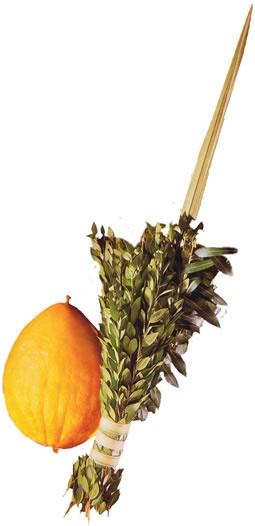
The time they would do this, more than any other, was at Sukkot and then Simchat Torah. These are times of celebration when all our strict observance throughout the year and especially of Rosh Hashanah and Yom Kippur suddenly explodes into celebration. On Sukkot there is a powerful segment in which we hold lulav and etrog and circle the Torah, praying for Hoshanot which, in my understanding, is a sort of request for continued closeness with G-d in addition to actual deliverance. Then on Simchat Torah there is joyous dancing with Torah in the arms and singing until you're hoarse. Such beautiful expressions of passion for Torah.

Well, as long as you're allowed to do them.

Because in many factions of Orthodox Judaism, if you are a woman, the more you love the Torah, more contained you need to be and the greater distance you need to keep.

Every year the crescendo of the year grows, and then suddenly as we reach the peak, women simply step aside.

Now in my community there is a recent alternative minyan that meets occasionally called Tiferet. It follows the model of Shira Hadasha minyanim in which women and men both participate in the service within halakhic bounds -- actual bounds, not the more artificial ones that have become custom or habit in the majority of Orthodox minyanim. (As an example, women can lead psukei dzimrah, kabbalat shabbat or hallel, but not the portions of the service that require a minyan. In addition, we need a mechitza and cannot count in a minyan.)

I wasn't sure I wanted to become involved. I was nervous about whether it really would be halakhic and even wondered about the motivations of others involved, if they wanted some kind of less serious version of Judaism. But a few years ago our Rabbi triumphantly led the men of our shul outside for Hoshanot and, because I'd asked ahead of time, he made an announcement that women could walk in a circle too. No one did because there was no leadership. I had to struggle to retain any of the prescribed joy of the holiday and I wanted to go home. The men themselves didn't seem terribly enthusiastic. The rabbi was trying hard to bring them into the process emotionally, but their singing was quiet, the tone was lackadaisical. They were missing the simcha that I'd had moments before and that I'd never have a chance to share with the community.

So that's when Evan, the founder of Tiferet approached me. I didn't have to explain how I was feeling. He'd seen this many times before with other women which is exactly the reason he had started the minyan.

I became involved, reluctantly at first, and asked a lot of questions that helped me feel more confident in the halakhic nature of the minyan. I found that I just enjoyed being there more than I did in shul. Then Evan asked me to join the board, and I did, again, reluctantly. Then I accidentally joined a committee that planned an incredible Torah learning event during the summer, and now I realized I'm hooked.

Even more recently, I agreed to coordinate readers for Torah leyning. Since I was having difficulty filling the rotation for our first holiday service (second day of Sukkot), I decided it was time to take the plunge and learn to read myself.

I can't say it was completely new to me. I've read megillah for several years and I've read a few psukim for a women's Simchat Torah leyning, but I wasn't sure I understood the trope correctly. This time I worked and I worked at it, checking in with 4 different people, including U., to make sure I was on target.

In addition, I was asked if I would lead the Hoshanot service. I'd waffled many times before when Evan or Akiva (who co-plans the nitty gritty details with him) had approached me but this time there was no question.

So yesterday Evan held the Torah between the men's and women's side. The men circled on their side, the women circled on theirs, and everyone participated with me calling out the Hashonot in my loudest proudest voice. Let me say that again... everyone participated. Even ND walked beside me carrying her own toy lulav and etrog and didn't once tug on my sleeve or try to speak to me. She could feel the importance. That night when we talked about the good and bad of our day she even named that as one of her most important things.

The leyning, too, was successful. I feel great that I could contribute, proud of what I accomplished, appreciative that others seemed inspired when they approached me afterwards and said, "Was that really your first time?!"

But more important than that, I was allowed to have the passion that the Torah asks of us. I was allowed to pass it on to those around me who maybe are more ambivalent. How often do we hear laments about a lack of passion in the Jewish world, a lack of spirituality, a lack of leadership?


I have it. Thank you for letting me have it. Thank you for letting me, and my passion, lead.

Labels: , , , , ,

Saturday, April 14, 2012

Pesach Waste

So we made it through another wonderful Pesach. Relatively smooth transition into a chometz-free zone, visit from Savta and Saba, lovely sedarim, visits to the Crayola factory and Philipsburg Manor, tidy final chag and now just have to turn the kitchen back over tomorrow.

I'm always struck and worried by the amount of waste we generate on Pesach -- foil, water bottles, disposables in the kitchen, contact paper etc. I think we do a good job of keeping it relatively moderate, but it's still far more than any other time of year.

I read an article once about netilat yadayim (ritual hand washing) and water preservation. The article suggested that some might consider using less water for this ritual in order to prevent wasting it. However, the article suggested that the ritual is actually an opportunity to really concentrate on our appreciation of water, that we should use all the water we need for it as a way of reminding us in other matters not to waste. I wish I could find the article now to make sure I'm remembering it correctly. But alas...

So since I actually did use up several paper cups for tea throughout the week and two disposable water bottles, and lots of foil, I feel refreshed in my resolve for the rest of the year to be conscious of the amount of waste I generate and to minimize it wherever possible.

On another note, one regret I had was that I was unable to make it to a single shiur before Yom Tov. When I feel as disappointed as I do about this, it helps me find a way to correct it, so now I'm resolving to try to have at least one significant Torah learning event per month. That sounds like an awfully low bar, but it's what I'm up to right now. (I do read a couple of halakhas each morning after davening and try to read something Jewish before bed, but this is meager by comparison.) I'm starting by actually leading one part of a discussion about Ruth at a Rosh Chodesh group next week.

Shavuah tov!

Labels: , , , , , ,

Sunday, November 20, 2011

The Nature Of Thanksgiving

So ND -- who turns 5 in a few weeks -- commented that since Thanksgiving is a holiday, we will probably be reading Torah that day. I said that no, not really. Well, we do read Torah on Thursdays, but not because it's Thanksgiving. It's not a Jewish holiday, I explained.

She thought about this awhile and about an hour later determined that if Thanksgiving is not a Jewish holiday, then "Non-Jews read Torah on Thanksgiving."

Labels: , , , , , , ,

Sunday, October 23, 2011

A great beginning to the year

We've just completed our first year with a new rabbi. I was somewhat ambivalent about him when he first arrived. I would like to be part of a shul that is not just modern Orthodox but actively progressive in social activism, feminism, environmentalism etc., but his statements at his initial interviews included a lot about wanting our shul to be similar to others and not stand out as too different.

However, this year a few of us asked that he be more inclusive of women in various aspects of the chagim. He didn't want to "make a statement" but did agree to some gestures that have made a difference. A rabbi in his shoes is in a tricky position of wanting to make shul welcoming to many, but without irking others. He walked that line fairly safely, but the amount of difference for those of us to whom this matters, I think will help him reach his goals of making our shul a place that is welcoming and inspiring to as many as possible.

Last night I wrote him the following letter which he agreed that I could post here:

Dear Rabbi Block,

You came to our community eager to make change. Many times you’ve talked about helping our shul to increase its kavannah through coming to shul more.

Within our community there is a wellspring of kavannah and passion towards Judaism and mitzvoth that often goes untapped because it resides on side of the mechitza that often is ignored. This year, by encouraging the purchase of lulavim and etrogim, and in participating in hoshanas for women as well as men, you helped unleash a few more members’ expression of our faith in Hashem and commitment to Jewish practice. Likewise, by simply opening the door to the women’s Simchat Torah leining and smiling at us, you showed support for our eagerness to interact actively with the Torah (an action that is sometimes ironically viewed as illicit rather than praiseworthy).

I do not come to shul terribly frequently. I mentioned to you once before that this is due to anxiety around people. That is true. Kiddush is a time when I often feel awkward and uncomfortable, and sometimes I need to opt out because my week has been filled already with high intensity human interaction. On the weeks when I stay home, I feel I use the time well. I daven, I read the parsha and often do some other Torah study on my own, and I meditate – a tool that helps me connect with Shabbat very intimately. I still need that time to refresh myself. However, that is not the entire reason that I do not come.

Many years ago I was often one of very few women who came to shul early or at the less popular times. After years of feeling like an oddball and somewhat unwelcome if walking home with throngs of men, I gave up. I have felt less and less as though shul is a place where I can achieve anything spiritually. In the wake of that I have felt greater passion for Judaism through the outlet of organizations such as Hazon, but far less through prayer and the shul community.

By making the efforts you have over the past weeks, you are now giving me a chance to potentially feel more welcome and valued for attending shul. I am reconsidering my relationship to prayer and feeling the importance of modeling that both for Naomi and for my peers. The gestures you made these weeks which I mention above may have seemed either simple or risky, but they are making a difference in me and in others towards your goals for creating a community that embraces Torah.

I hope that over the coming years we’ll be able to work together to achieve the goals of having more Torah study, of greater commitment to halakhah, and of having all members of the shul –both men and women - feel integral to the community’s relationship with G-d.

Thank you

Labels: , , , ,

Wednesday, October 12, 2011

Let's talk about why we should, not why we don't have to

Just came in from the backyard. Another dip into my annual adventure of climbing into our backyard ditch for schach for the sukkah. Just needed a little more to be a little more sure of the Kashrut of our Sukkah's hole-y roof. While working on it, I had some thoughts I need to share on why I love Sukkot/Simchat Torah and why it's one of the more challenging weeks of the year for me.

People complain sometimes that spirituality can seem distant within Judaism. The prayers feel foreign, even when read in English, the routines and rituals strange, the rules strict. But Sukkot has so much potential for fun and love.

How physical it is! Your whole body thrown into building the sukkah, getting the schach, making the decorations. I love that each of us can take on our own special role preparing for the holiday, not because of what's dictated or even custom, but because of our talents. My husband is creative at assembling things. He puts up our sukkah. I love getting down and dirty in nature. So I climb into a ditch and saw bamboo and vines to throw on top. Our daughter loves art. So we all decorate with her together. And throughout this we can talk or laugh or do it on our own time rather than following dictates of decorum the way we must (and should) in shul. Yes, there are rules, but they are general, leaving lots of room for creativity.

Then there are the religious rituals themselves that do have rules, the waving of the 4 species with so many interpretations towards their meaning. The hakafot at shul, where the community continues showing our allegiances to G-d that we re-established, crowned and surrendered to from Rosh Hashanah to the closing moments of Neilah.

Throughout the week we're meant to completely immerse ourselves, as a family, in the mitzvah, living in the Sukkah -- eating, sleeping, relaxing. Not like women's monthly immersion in mikveh, or some mens' voluntary immersion right before Shabbat or a chag that is so powerful but private. But a family endeavor to just be together with G-d peeking through the latticework above us with absolute love and joy.

By Simchat Torah there is the dancing, the communal celebration, the opportunity to get up so close to the Torah itself and begin anew -- storing up joy and optimism to hold us through the winter ahead.

So then, why do people want to spend so much time saying what we don't have to do?

Start with rain, mosquitos, cold... people become uncomfortable very quickly in the sukkah. I don't wish to criticize this too thoroughly. I appreciate that the Torah allows us to protect ourselves rather than put our bodies at risk for the sake of a mitzvah. And I totally agree with disdain towards mosquitos, one of the few of Hashem's creations for which I have hardly any tolerance.

But rain?

The slightest sprinkle leads to the biggest complaints. And again, I want to be sensitive, but without rain, there would be no life. It's no less straightforward than that. Sometimes it can be uncomfortable, but I'd like to propose that others try to feel how refreshing it is, to feel G-d sending blessing upon us. Like breastmilk from a mother, it can't be replicated in any way, and we're completely dependent on its nourishment. Think of parts of the world in which water is conserved, weighed, prayed for. Can you imagine people living in those regions describing it as "disgusting?"

And now let me provide you of a list of things that women "don't have to" do:
-eat, sleep or dwell in a sukkah
-carry a lulav and etrog for hoshanas
-participate in hakafot
-read from or receive an aliyah at the Torah

Fine, what an opportunity for women to show their commitment voluntarily rather than by obligation.

Or not... because how often are we actually barred from doing these mitzvot?

How often have you been in a sukkah that is not quite big enough or in which the schach is not all quite right, and the women take seats on the periphery since "it's not our mitvah?"

As as hoshanas, and hakafot, these are so totally easy to carry out on the women's side of the mechitzah, and how often do they not, either because the shul doesn't provide leadership to make it happen or the women don't want to appear as rocking the boat, and so stand back and either don't care or pretend not to care?

And aliyot... okay, that's tricky, but I can tell you I'm going to be both layning and receiving an aliyah at a women's Torah reading. For those who feel this is "not their thing," and prefer to connect with Torah in another way, such as learning in a class, so be it. For those who just don't care because they've been excluded for so long... what a tremendous loss.

While working on a fictional story this summer about a high school girl who had to make a choice of whether to make an activist gesture or not, at risk to her comfort in remaining silent, my teenage niece commented that "It's cool to not care." We talked about the discomfort in being passionate about doing something wonderful or just, and how sometimes it leads to feelings of isolation or loneliness.

I wish that not caring was just a phase we went through. Sometimes it's something we still need to grow out of.

This season is filled with so much opportunity to feel powerfully connected with the creator who brought life to us and to all of nature, together with so much love. My prayer is that we throw ourselves into the season whole-heartedly to care and be in it together.

Labels: , , , , , ,

Saturday, June 18, 2011

10 Year Anniversary Dvar Torah

What a great Shabbat this has been. Yesterday was our 10 year anniversary, so today we sponsored a kiddush and had some guests for Shabbat where I shared a little Dvar Torah.

10 years ago, at the Shabbat preceding our wedding, I spoke to a room of women including my mother and mother-in-law-to-be about the parsha Shelach. In the parsha, the spies that enter Israel bring back reports of a land of abundance. I remember describing to the group the enormous grapes they carried, and I compared these fruits to the success they have shown me in their own marriages as U. and I prepared to enter into that "land" as well.

10 years later, I have more to add. Just as the spies came out with abundant fruits they also brought out some fears in the people. Throughout our marriage we have had many ups, but downs too. Many of our conflicts have come from us either following bad habits or trying too much to emulate what we thought our roles should be based on what we'd seen in others.

Over the years we've learned to believe in ourselves as individuals more, to believe in each other more, and to believe in the marriage itself more. At the times when I've felt the least secure in our marriage, it has been very similar to another part of the parsha, when the meraglim say, "We were like grasshoppers in our eyes." This unhealthy self-concept can lead to dysfunction.

The more I've been able to create a healthy respect for myself, the more I've been able to respect my spouse as well, and the happier we've grown. We don't always have to follow what other couples look like. As Dr. Seuss is quoted as saying, "Be who you are and say what you feel because those who mind don't matter and those who matter don't mind."

Labels: , , ,

Thursday, May 19, 2011

Bedtime rocks

I'm sitting working on my laptop as ND tries to fall asleep.

"Mom?"

"Yes, hon?"

"Who made Hashem?"

Labels: , , , ,

Sunday, November 14, 2010

Wells

Wow it's been a long time since I've written...

So on Friday night I gave a dvar Torah. Hence the motivation to actually write right now!

I was asked to give the drash to a special minyan. It's a group that gets together now and then to do a Shira Hadasha style minyan, otherwise referred to an inclusive halakhic minyan. In other words, women get to do as much in the service as they possibly can according to halakhic standards.

To prepare for the drash I began by reading Vayetzei, that week's parsha, and discovered the passage about the well. Yaakov encounters a well that is surrounded by shepherds. There is a large stone on the mouth of the well. The shepherds cannot use the well until enough are present to remove the stone. In a show of strength, Yaakov then removes the stone all by himself and accesses the waters.

I decided to look for other recent places in which wells are mentioned. In Toldot we learn about Yitzhak unstopping wells that Avraham had dug, but which had been filled in by Philistines.

And a week before that, in Chayei Sarah, we read of Eliezer seeking a wife for Yitzhak. He knows he has found the right person when he encounters Rivka who opens her jug and the waters of the well actually come to her (according to midrash). She offers chesed to Eliezer in the form of drawing water until neither he nor his camels are thirsty anymore.

Wells are often used as metaphor for Torah. For the purposes of this drash, I focused specifically on accessing water as a way of accessing our relationship with G-d through prayer. Prayer is a simple concept. We speak to G-d to answer our needs. But tefillah is more complicated, especially with the form we use halakhically. How strange it is that we do the same rituals again and again, for many hours, often without even understanding what most of the prayer service means? How can the different personality types near the wells inform us of probable other motivations that bring us to daven at all.

Yaakov represents strength. In him I see the type of person who never misses a chance to daven correctly and at the correct time.

In the shepherds by the well I see a yearning to work together collectively and to be part of a community in accessing the waters of the well.

There is a great deal to be said about Yitzhak unstopping the wells of his father. Firstly, he is not digging new wells, he is accessing the wells of the previous generation, passing down liturgy through the years.

The idea of the wells being stopped can be thought of in many ways. What can stop up wells?
-enemies of the Jewish people
(with this I think of when I went on March of the Living many years ago and watched teenagers who had otherwise lost touch with Judaism, suddenly yearn to daven with the same words as their ancestors who had been collectively murdered)
-distractions like materialism, our work lives etc.
-unfortunately, with getting into a rut. While we may want to access the same wells previous generations did, we can't always do it in quite the same way and may need to reclaim it in a way that is refreshing for us.

Finally there is Rivka... in some ways she's opposite of Yaakov. Instead of using strength to access the waters, she opens herself up. Like a meditator, she has learned to gently receive G-d's blessings. Even better, the result of her ability to do this so gently and gracefully is that she is able to naturally give back chesed to the world. Her choice to access the waters benefits the entire world.

I find all of these elements and motivations within myself in different combinations at different times. If I am capable of feeling all of them, so are many. This reflects the wide diversity of ways in which halakhic Jews can be motivated to come together and daven. With such diversity of ways, we need a diversity of wells, and for that I'm grateful that there are new options available.

Labels: , , ,